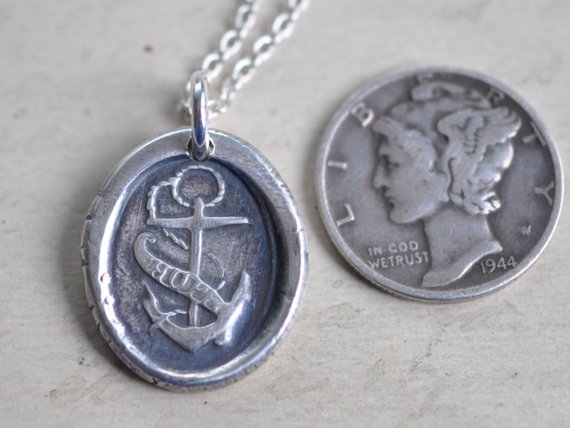
This article is copyrighted. Copying, even to your genealogy pages, is prohibited by US and international law. You may "share" it with the URL link because it preserves the author's copyright notice and the source of the article.
All rights reserved. This book or blog article, or any portion thereof may not be reproduced or used in any manner whatsoever without the express written permission of the author except for the use of brief quotations in a book review.
John Endecott, first governor of Massachusetts Bay Colony, was a hot-headed, zealous Puritan who had a long history acting first and dealing with consequences later. His extreme religious beliefs led him to cut the cross out of the British flag (treason), to chop down a festive Maypole where some not-so-Puritan English settlers were observing centuries-old celebrations, to require Taliban-like sumptuary laws of Massachusetts women (clothing, jewelry, embroidery and lace, head coverings, and—if he could have—requiring face veils), and he’s particularly infamous for his intense hatred for and persecution of the Quakers. He was the governor who pronounced Mary Dyer’s death sentence.
 |
Gov. John Endecott, with signet ring
on his right little finger. |
Endecott wore a ring on his right pinkie finger, which he
used as a signet to impress in the soft wax of a seal on letters or documents
proving it was his own signature. Endecott’s ring had the image of a skull and
crossbones, known as a
memento mori,
a reminder that all men must die.
 |
| Nazi SS death's-head ring from World War II |
Today, everyone associates the skull and crossbones with
pirate flags, and death by toxin. Latin cultures celebrate a Day of the Dead on
November 1 and use a skull motif. Some remember that the death’s head was the
emblem of the Nazi SS. Heinrich Himmler, who oversaw the systematic extermination
of untold millions of Jews and Slavs, wore a death’s head on his belt
buckle that said, “God with us.” The Nazi death-camp guards wore buttons with
the death’s head.
 |
| Heinrich Himmler's belt buckle. |
In the 16th and 17th centuries, the memento mori became popular as mementoes
of the dead, containing a lock of hair, a picture of an urn or skeleton, in a
ring or pendant. The rings took several forms, sometimes a skull mounted on a
slim gold ring, sometimes a circle with enamel over gold, or an inside
inscription, and sometimes a disk that could be pressed as a seal. Endecott
seems to have had the latter.
John Endecott’s letter to John Winthrop in 1643 was sealed
with the death’s head in wax.
This is a snippet from a “Memoir” written by his
descendant, Charles Endicott, in 1847.
The letter ends with this
salutation:
“…The Lord our good
God uphold and continue you amongest us to do yet further service to whose
grace I committ you,
Yours ever trulie to
serve,
Salem, 26th 6th mo., '43. [26 August 1643]
Jo: Endecott.”
The biographer, a seventh-generation descendant of Governor
Endecott, wrote,
“The foregoing letter is
transcribed from the original, now found among the papers of Gov. Endecott, in
a very good state of preservation. The chirography is handsome, but difficult
to read, the characters being those used at the beginning of the 17th
century. Notwithstanding the lapse of two hundred years [1643-1847], the
sealing wax still bears the perfect impression of the flesh of his thumb, where
he pressed it down on account of its thickness. Its subscription is
To
the right worshipfulle John Winthroppe, Esq., Governr. at Boston, Dl [deliver]."
He continued,
“The
seal is a death's head and cross bones, an apt emblem of the gloomy minds,
and tastes of our Puritan fore-fathers. On the outer circle is the name of ‘
John
Garrad.’ This was an impression from a signet ring which he wore upon the
little finger of his right hand.”
John Garrad had been sheriff of Hertfordshire for about
three years. He died in 1625; possibly, the ring belonged to Garrad and was
given to Endecott at the funeral. This seems likely because Endecott would have
had his own name or initials on a ring if he’d commissioned it for himself.
Endecott sailed for Massachusetts
in 1628, a recent convert to the Puritan beliefs, and a married man for the
first time at age 40.
 |
Footnote from 1847 biography of John Endecott
"A death's head on your hand you need not weare,
A dying head you on your shoulders beare." |
Endecott didn’t start his bloody reign of terror when the
Quakers arrived in New England in 1656. He was
one of the militia captains who slaughtered or enslaved hundreds of Pequot
Indians (men, women, and children) in 1636-37. He was one of the magistrates
who prosecuted Anne Hutchinson, inspected the deformed, stillborn fetus of Mary
Dyer’s, hanged women as witches, and in 1651, was responsible for the
near-fatal beating of the Baptist minister of Newport, Rhode Island, Obadiah
Holmes, when he and two other Baptists went to Salem to encourage an elderly
Baptist in his own home.
That prompted a letter exchange with Rev. Roger Williams,
who lived at Providence, but had been friendly
with Endecott in the early 1630s when he preached at Salem. Rev. Williams was not a man who was
short on words, nor was he hesitant to use all the sharp, pointy arrows in his
quiver! He said that those who sent a letter with the death’s-head seal were
flying to the hole or pit of rottenness (a.k.a. hell). His letter was very
long, and I’ve selected some excerpts for you.
The
copy of a letter of Roger Williams, of Providence, in New England, to Major Endicott,
Governor of the Massachusetts, upon occasion of the late persecution against
Mr. Clarke and Obadiah Holmes, and others, at Boston, the chief town of the
Massachusetts in New England.
August, 1651.
Sir,—Having done with our transitory
earthly affairs (as touching the English and the Indians) which in companion of
heavenly and eternal, you will say are but as dung and dross, &c. Let me
now be humbly bold to remember that humanity and piety, which I and others have
formerly observed in you, and in that hopeful remembrance to crave your gentle
audience with patience and mildness, with ingenuity, equanimity and candor, to
him that ever truly and deeply loved you and yours, and as in the awful presence
of His holy eye, whose dreadful hand hath formed us to the praise of His mercy
or justice to all eternity.
---
Sir, while something of this nature
I muse over your Death's head, I meet (in the entrance
of your letter) with this passage, "Were I as free in my spirit as
formerly I have been to write unto you, you should have received another manner
of Salutation then now with a good Conscience I can Express; However God
knoweth who are his, and what he is pleased to hide from sinful man in this
life, shall in that great Day be manifested to All."
Sir, it hath pleased the Father of
Spirits at this present to smite my heart in the very breaking up of your
letter, This Death's Head, tells that
loving hand that sealed it, and mine that opens your letter, that our eyes, our
hands, our tongues, our brains are flying hence to the hole or pit of
rottenness : Why mould not therefore such our letters, such our speeches, such
our actings be, as may become our last: minutes, our death-beds, &c. If so,
how meek and humble, how plain and serious, how faithful and zealous, and yet
how tender and loving mould the spirits and speeches be of dying and departing men?
[In modern terms, Live as if each day is your last, and be tender and loving in spirit and in speech.]
Sir, will my honored and beloved
friend not know me for fear of being disowned by his conscience? Shall the
goodness and integrity of his conscience to God cause him to forget me? Oh how
comes it then that I have heard so often, and heard it lately, and heard so
much, that he that speaks so tenderly for his own, hath yet so little respect, mercy or pity to the
like conscientious persuasions of other men? Are all the thousands of millions of
millions of consciences, at home and abroad, fuel only for a prison, for a
whip, for a stake, for a gallows? Are no consciences to breathe the air,
but such as suit and sample his? May not the most High be pleased to hide from
his as well as from the eyes of his fellow-servants, fellow-mankind,
fellow-English? And if God hide from his, from any, who can discover? Who can shut
when he will open? and who can open when he that hath the key of David will shut?
All this and more (honored Sir) your words will warrant me to say, without any
just offence or straining.
Object. But what makes this to
Heretics, Blasphemers, Seducers, to make them that sin against their conscience
(as Mr. Cotton sayeth) after conviction? What makes this to stabbers of Kings
and Princes, to blowers up of Parliaments out of conscience?
---
Oh Sir, you cannot forget what language and dialect this is, whether
not the same unsavored, and ungodly, blasphemous and bloody, which the
Gardiner's and Bonner's [Catholic bishops who tortured and killed Protestants
in Bloody Mary’s reign] both former and latter used to all that bowed not to
the State golden Image of what Conscience soever they were. And indeed, Sir, if
the most High be pleased to awaken you to render unto his holy Majesty his due praises,
in your truly broken-hearted Confessions and Supplications, you will then
proclaim to all the world, that what profession soever you made of the Lamb,
yet these expressions could not proceed from the Dragon's mouth.
---
Sir, I must be humbly bold to say,
that 'tis impossible for any man or men
to maintain their Christ by their sword, and to worship a true Christ! to fight
against all Consciences opposite to theirs, and not to fight against God in some
of them, and to hunt after the precious life of the true Lord Jesus Christ. Oh
remember whether your Principles and Consciences must in time and opportunity
force you. 'Tis but worldly policy and
compliance with men and times (God's mercy overruling) that holds your hands from
murdering of thousands and ten thousands were your power and command as
great as once the bloody Roman Emperors was.
---
It hath been his way and course in
all countries, in Germany, France and England, (especially) whatever
their pretences have been against Heretics, Rebels, Schismatics, Blasphemers,
Seducers, &c. How hath he left them to be their own Accusers, Judges, Executioners,
some by hanging, some by stabbing, some by drowning and poisoning themselves, some
by running mad, and some by drinking in the very same cup which they had filled
to others?
Some may say, “Such persecutors
hunted God and Christ, but I, but we, &c.” –
I answer, the Lord Jesus Christ foretold how wonderfully the wisest of the
world, would be mistaken in the things of Christ, and a true visible Christ
Jesus! When did we see thee naked, hungry, thirsty, sick, in prison, &c.
---
Oh remember it is a dangerous combat for the potsherds of the earth to fight with
their dreadful Potter. It is a dismal battle for poor naked feet to kick
against the pricks; it is a dreadful voice from the King of kings, and Lord of
lords, “Endecott, Endecott, why huntest
thou me? why imprisonest thou me? why finest, why so bloodily whippest, why
wouldest thou (did not I hold thy bloody hands) hang and burn me?”
---
First, On a moderation towards the
Spirits and Consciences of all mankind, merely differing from or opposing yours
with only Religious and Spiritual opposition.
Secondly, A deep and cordial resolution
(in these wonderful searching, disputing and dissenting times) to search, to listen,
to pray, to sail, and more fearfully, more tremblingly to enquire what the holy
pleasure, and the holy mysteries of the most Holy are; in whom I humbly desire
to be
Your poor fellow-servant, unfeignedly,
respective and faithful,
Roger Williams.
I’ve found no response from Endecott to Williams. Perhaps
the governor’s response was to ignore the sermon.
 |
Memento mori ring of the same period as Endecott's,
from Norwich, England |
Endecott served as governor or deputy governor for 14 more
terms before he died in 1665. His descendant and biographer, writing in 1847,
believed that he died peacefully at age 77. Some historians say that Endecott
was ill or gangrenous and stank so terribly that servants refused to enter the
room. Another writer says that Endecott was known to have a painful back condition, and her theory is that he had syphilis from his youth (when
he fathered a bastard son), and the disease had affected his sanity and erupted
as a sore, which would explain the foul odor.
I mentioned Endecott's
memento mori in both of my novels,
Mary Dyer Illuminated, and
Mary Dyer: For Such a Time as This. The first mention was when William Dyer was discussing Roger Williams' letter. The ring shows up again at Mary Dyer's death sentence. Tiny details like this require 20 or more hours of research, but they bring an authenticity to the scene.
Christy K Robinson is author of
these books:
And of these sites:
Discovering
Love (inspiration and service)
Rooting
for Ancestors (history and genealogy)
William and Mary Barrett Dyer
(17th century culture and history of England and New England)